
First DUI Offense Oklahoma
Estimated Read Time: 19-20 Minutes
Facing a first-time DUI charge in Oklahoma is undoubtedly a significant challenge. Still, it is also a powerful opportunity to take control of your future and demonstrate your commitment to a positive path forward. By proactively engaging with the legal process, you aren’t just meeting a requirement. You are proving to the court that you are a responsible citizen who is ready to put this chapter behind you. With the right strategy and a focused mindset, what feels like an overwhelming setback can be transformed into a manageable, even transformative, experience. This journey is about more than just navigating a court case. It’s about moving forward with confidence, armed with the knowledge and support necessary to ensure your first mistake is also your last. Every step you take today is a step toward reclaiming your peace of mind and protecting the bright future you have ahead of you.
 Key Takeaways
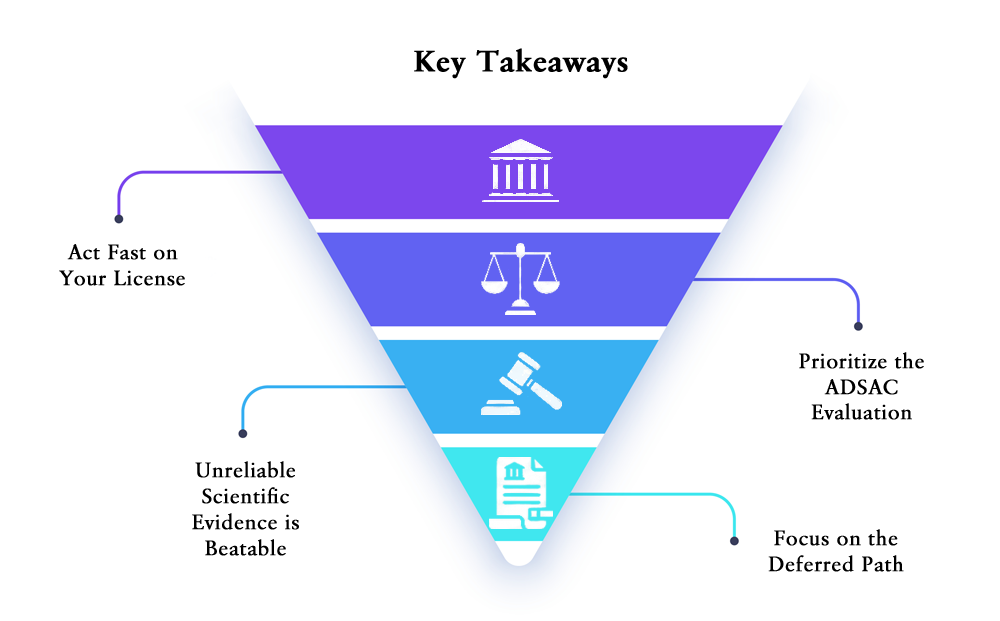
Act Fast on Your License: You have 30 days after your arrest to keep your driving privileges and prevent a permanent DUI mark on your driving record. This can be done by appealing your license suspension, which initiates a hearing where the state is responsible for upholding each element of its case.
Prioritize the ADSAC Evaluation: Completing your alcohol assessment and starting your classes early can help your lawyer negotiate for a deferred sentence and a cleaner criminal record.
Unreliable Scientific Evidence is Beatable: Breath, blood, and field sobriety tests are not automatic proof of guilt, as they are often prone to human error, medical interference, or technical failure.
Focus on the Deferred Path: By following all court rules, most first-time offenders can eventually have their cases dismissed and expunged.
First DUI Offense in OK
A first-time offense for driving under the influence is primarily governed by 47 O.S. § 11-902, which traditionally classifies it as a misdemeanor. However, significant legislative updates, including Senate Bill 54 and the Sentencing Modernization Act, have dramatically shifted the legal landscape for 2026. Under these new provisions, a first-time arrest can now be elevated to an aggravated DUI felony if specific factors are present, such as a blood alcohol concentration of 0.15% or higher, causing an accident, or having a passenger under the age of 18 in the vehicle. This reclassification means that, even without a prior criminal record, a driver may face the long-term consequences of a felony conviction, including higher fines and more restrictive probation terms.
The sentencing structure for a standard first-offense misdemeanor typically includes a potential jail term of 10 days to 1 year and a fine of up to $1,000.00. In practice, many first-time offenders are eligible for a deferred sentence, which allows the charge to be dismissed if the driver completes a period of probation and all court-ordered requirements. Beyond the courtroom, there are mandatory administrative consequences handled by Service Oklahoma. Drivers must enroll in the Impaired Driver Accountability within 30 days of their arrest to maintain their driving privileges. This program requires the installation of an ignition interlock device for six months and the completion of a professional alcohol and drug assessment, ensuring that the legal and administrative paths to resolution remain strictly focused on public safety and rehabilitation.
Recent Changes to the Law
Starting in 2026, Oklahoma has significantly toughened its stance on first-time DUI offenses. While a standard DUI without any complications is still usually a misdemeanor, the law now identifies several aggravating factors that can instantly turn a first-time mistake into a serious felony. Under Senate Bill 54, if you are arrested with a high blood alcohol content of 0.15% or more, have a child in the car, or cause even a minor traffic accident, you are no longer facing just a simple misdemeanor. These factors now trigger aggravated DUI status, which carries harsher penalties and removes much of the leniency judges used to have.
The most notable change for 2026 is the introduction of mandatory jail time and stricter sentencing. Under the Oklahoma Sentencing Modernization Act, many of these aggravated first offenses now fall into a structured felony grid. This means that instead of receiving a fully suspended sentence where you stay home on probation, you may be required to serve at least 10 days in jail, which cannot be waived. The state has effectively closed loopholes, making it much easier for prosecutors to seek felony charges and prison time for first-time offenders who pose a higher public risk.
In addition to the criminal court changes, the administrative side remains strict. You still only have a narrow 30-day window to join the Impaired Driver Accountability Program if you want to keep driving. If you miss this deadline, your license is revoked automatically. Even if you join the program, the new laws ensure that if your offense was aggravated, you will be required to use an ignition interlock device for a longer period and face more intensive alcohol monitoring than in previous years. These updates collectively mean that a first DUI in Oklahoma is now treated with a level of severity previously reserved for repeat offenders.
Four Ways Someone Can Be Charged with DUI in OK
In Oklahoma, there are four primary ways the state can charge you with a first-time DUI as of 2026. These rules, governed by 47 OK Stat § 11-902, are designed to cover everything from scientific test results to an officer’s personal observations of your behavior.
The first is DUI “per se.” This is the most straightforward charge and relies entirely on a breath or blood test result. If your test shows a blood alcohol concentration (BAC) of 0.08% or higher within two hours of driving, you are considered guilty “per se.” This means the prosecutor does not have to prove you were actually driving poorly, the number alone is enough to convict you. Under the new Sentencing Modernization Act, if that number hits 0.15% or higher, it is automatically classified as an aggravated DUI.
The second is DUI “under the influence,” or “less safe.” This version is used if you refused a chemical test or if your test results were actually below the 0.08% limit. In this scenario, the state must prove that alcohol or another substance made you incapable of safely driving. To do this, prosecutors rely on subjective evidence, such as swerving, slurred speech, bloodshot eyes, or a failed field sobriety test. Following the changes in Senate Bill 54, if an officer determines you were under the influence and you also caused even a minor accident or had a child in the car, you can be charged with a felony on your very first offense.
You can also be charged if you are impaired by any intoxicating substance other than alcohol. This is referred to as DUI Drugs, or DUID. This includes illegal drugs, but it also covers legal prescription medications, such as anxiety or sleep aids, and medical marijuana. The law doesn’t care if the substance was legal to possess. It only cares if it made you an unsafe driver. As of 2026, Oklahoma has refined these rules to ensure police focus on active impairment rather than just finding traces of a substance in your system. Still, the penalties remain just as severe as an alcohol-based DUI.
There is also a charge related to being in actual physical control. This charge is unique because it applies even if the car was never moving. If you are found intoxicated in the driver’s seat of a parked car with the keys within reach, whether the keys are in your pocket, on the dashboard, or in the ignition, you can be arrested for APC. The law treats this exactly like a standard DUI because it assumes you had the potential to drive at any moment. Under the current sentencing grid, an APC charge carries the same risks for jail time, fines, and felony escalation as a regular driving offense
Field Sobriety Tests
Police use field sobriety tests to see if you are physically or mentally impaired, and they have become much more important because of the strict new laws that took effect in 2025 and 2026. These tests are essentially divided-attention exercises designed to assess whether you can follow complicated instructions while performing a physical task. It is very important to know that in Oklahoma, these roadside tests are strictly voluntary. You have the legal right to say no to them, and unlike refusing a breathalyzer at the police station, refusing these physical tests won’t automatically cost you your driver’s license. However, if you do choose to take them, the officer will be looking for very specific clues to prove you are drunk or high, and their observations can be used to turn a simple traffic stop into a serious felony charge.
The three most common tests are horizontal gaze nystagmus, walk-and-turn, and one-leg stand. In the eye test, the officer watches to see if your eyes jerk involuntarily as you follow a pen or light. For the walking test, they look to see if you can walk nine steps heel-to-toe in a straight line, turn correctly, and walk back without losing your balance or starting too early. In the one-leg stand, you have to hold one foot six inches off the ground and count out loud for about 30 seconds. The police are trained to count even small mistakes, such as using your arms for balance or swaying slightly, as a fail. If an officer decides your performance on these tests shows you are aggravated or highly impaired, they can charge you with a felony on your very first offense, which could lead to a mandatory 10 days in jail that a judge cannot take away.
Because these tests are so subjective, they often make up the biggest part of a DUI case in 2026. Everything is usually recorded on an officer’s body camera, which can be both a blessing and a curse. While the police will use the video to try to prove you were not safe to drive, a defense lawyer can use the same footage to show that you were actually steady and alert, or that the officer didn’t follow the official NHTSA guidelines. Factors like being over age 65, having a physical injury, wearing high heels, or even just standing on a windy, uneven roadside can all make a sober person fail these tests. Especially with the new 2026 updates regarding medical marijuana, these tests are now the main tool the state uses to try to prove someone is actively impaired while driving, rather than just having old traces of medicine in their system.
Refusing Field Sobriety Tests
As of 2026, the decision to refuse field sobriety tests in Oklahoma is among the most important a driver can make during a traffic stop. While these physical tests, such as walking a straight line or standing on one leg, are often used to build a case against you, they are strictly voluntary in this state. This means you have the legal right to politely decline them without facing an automatic license suspension. This is very different from refusing a breathalyzer or blood test at the station, which usually results in the immediate loss of your driving privileges. By refusing the roadside physical tests, you prevent the police from getting body camera footage of you swaying or stumbling, which is often the most powerful evidence a prosecutor can use in court.
However, refusing these tests is not a get-out-of-jail-free card. Under the current laws, if you refuse to perform the exercises, the prosecutor can still argue in front of a jury that you only said no because you knew you were too drunk to pass them. Furthermore, even if you refuse the tests, the officer can still arrest you if they see other signs of impairment, like the smell of alcohol, slurred speech, or bloodshot eyes. Once you are under arrest, the rules change. If you then refuse the chemical breath or blood test, you will face an automatic license revocation and be required to join the Impaired Driver Accountability Program, where you’ll have to pay for a breathalyzer to be installed in your car to keep driving.
The stakes for refusing are even higher now, thanks to recent changes to the law. These laws allow the state to turn a first-time DUI into a felony if your impairment is considered aggravated. If you choose to take the tests and perform poorly, that video evidence can be used to push your case into a higher felony category, which now carries a mandatory minimum of 10 days in jail that a judge cannot waive. In short, while refusing the physical tests keeps potentially damaging video out of your file, it will almost certainly lead to an immediate arrest so that the police can seek more scientific proof, such as a breath or blood sample.
Refusing a Breath Test
In Oklahoma, if you are pulled over for a suspected DUI, you will likely face two different requests to blow into a breathalyzer. The first request usually comes from the side of the road with a small handheld device. It is possible to refuse this initial roadside test without facing an automatic license suspension. This is because the roadside test is mostly used to give the officer a reason to arrest you, rather than being used as final evidence in court. If you refuse, the officer may still arrest you based on other observations, but they will have one less piece of evidence against you.
Once you are under arrest and taken to the police station, the situation changes because of Oklahoma’s Implied Consent Law. This law says that by driving on public roads, you have already agreed to take a formal breath or blood test if arrested. If you refuse this second, more official test at the station, your driver’s license will be automatically taken away for at least 180 days. Additionally, a prosecutor can tell a jury that you refused the test because you knew you were intoxicated.
If you do decide to take the official breath test at the station, Oklahoma law gives you the right to ask for a second, independent test, usually a blood test, at your own expense. It is important to ask for this because if the police do not help you get that second test after you request it, your original breath test results might be thrown out of court. No matter what you choose to do, you only have 30 days from the date of your arrest to contact the Department of Public Safety to join a program called IDAP if you want to keep any form of driving privileges.
Lookback Period
The look-back period is the 10-year window the state uses to check your history and decide if a new DUI should be treated as a first-time misdemeanor or a more serious felony. As of 2026, under the Oklahoma Sentencing Modernization Act and 47 OK Stat § 11-902, this 10-year clock is the standard for determining if a crime is enhanced. If you have no other DUI convictions within the last 10 years, your new case is generally treated as a first offense. However, the clock doesn’t start on the day of your old arrest. Instead, it typically starts from the date you successfully finished your probation or jail time for that previous case.
It is important to understand that in Oklahoma, a first offense doesn’t necessarily mean you’ve never been arrested before, it just means you haven’t had a conviction or a deferred sentence in that 10-year window. Even if you received a deferred sentence, that still counts as a prior for 10 years and will trigger a felony charge if you get arrested again. If your old DUI was more than 10 years ago, your new arrest will usually be handled as a misdemeanor. However, the old case remains on your permanent criminal record unless you get it officially expunged.
The 2026 laws have also changed how prosecutors look at your history. While the law technically only looks back 10 years to decide if a charge is a felony, prosecutors and judges can still see your entire lifetime record. Because the new Sentencing Modernization Act uses a strict grid to decide punishments, they may be less likely to offer you a break or a plea deal if they see multiple old DUIs, even if those arrests happened 20 years ago. In short, the 10-year look-back period is what determines the legal label of your charge, but your entire history can still influence the actual punishment you receive.
The 30-Day Window
The 30-day window is a strict and critical deadline for saving your driver’s license after a DUI arrest. As of 2026, the licensing side of your case is managed by Service Oklahoma, and the rules are very clear: from the moment the police officer hands you a notice of revocation, usually the day of your arrest, the clock starts ticking. If you let 30 days pass without taking action, your license is automatically revoked for at least six months on the 45th day, and you lose the chance to apply for any work permit or modified license.
To keep driving legally during this time, you must apply for the Impaired Driver Accountability Program, or IDAP, within that 30-day window. Under the current rules, you apply through the Board of Tests website and pay an estimated program fee of $200.00 to $250.00. By joining IDAP, you agree to install an ignition interlock device for 6 months. The big benefit is that if you complete this program correctly, the DUI revocation never actually hits your permanent driving record, which helps keep your insurance rates from skyrocketing and protects your future employment.
If you miss that 30-day deadline, you face a much harder road. You can no longer wait six months and get your license back. The 2026 Sentencing Modernization Act guidelines now require you to complete IDAP regardless of how long you wait. This means that missing the window only delays the inevitable. You will still have to pay for the breathalyzer device and the program fees later, but you’ll have to spend the first six months without any legal way to drive. In short, acting within these first 30 days is the only way to stay on the road and keep your driving record cleaner than it would be otherwise.
 Appealing a License Suspension
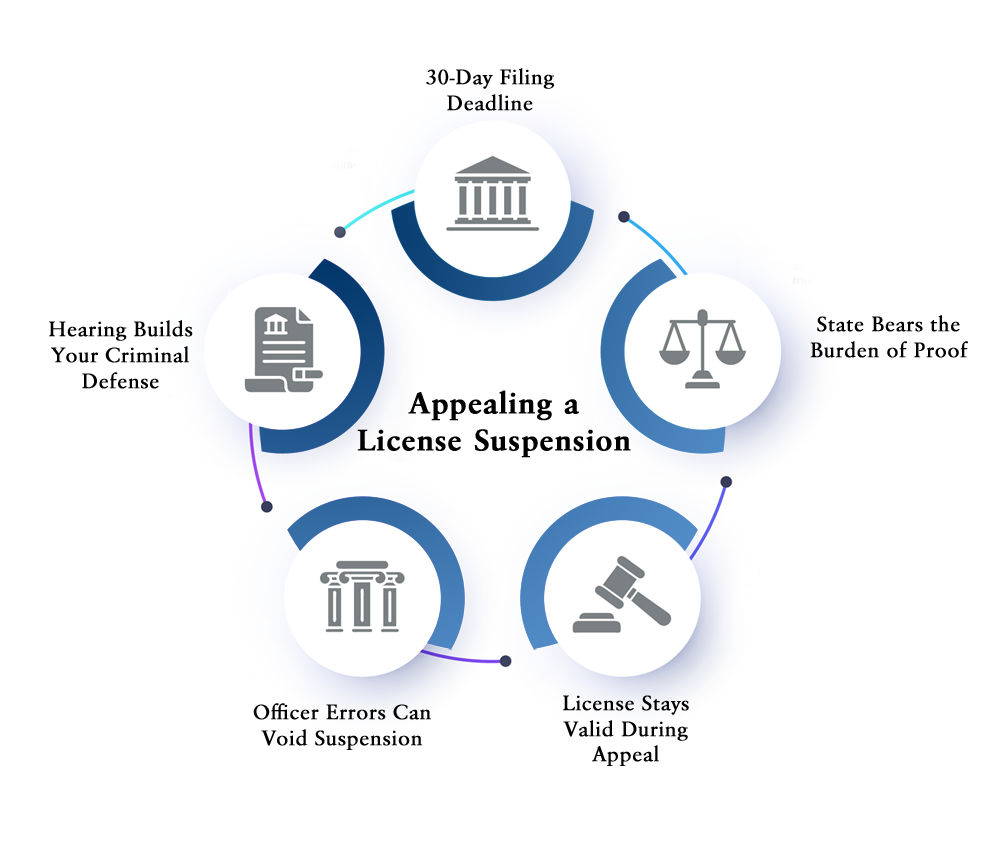
It is important to know that you can issue a formal challenge to Service Oklahoma in order to initiate the process of appealing a license suspension. Appealing is your way of stopping the state from automatically taking your driving privileges by forcing them to prove their case in a court of law. Instead of a clerk making a decision behind the scenes, a District Court judge will oversee a hearing to determine if the state followed the law correctly.
The most critical factor in this process is the 30-day deadline. You have exactly 30 days from the date you receive your notice of revocation to file your petition in the District Court of the county where you were arrested. If you miss this window, the suspension becomes final and automatic, leaving you with no way to challenge the officer’s actions or the test results. However, if you act promptly and file the appeal, Service Oklahoma is generally required to place your suspension on hold, which often allows you to retain your full driving privileges while you wait for your court date.
At the hearing, the burden of proof rests entirely on the state. To uphold the suspension, the prosecutor must prove that the officer had a valid, lawful reason to stop you and that they had probable cause to believe you were driving or in control of a vehicle while intoxicated. If it was a refusal case, they must prove you were properly warned of the consequences. If you took a test, they must prove it was done within the legal two-hour window and that all scientific procedures were followed perfectly. If even one link in this chain is weak or the officer’s testimony contradicts their own police report or body cam video, the judge can throw out the suspension and restore your license immediately.
Beyond just keeping your license, this appeal offers a hidden advantage: it is a fast track to building your criminal defense. Because the officer must testify under oath at the license hearing, often months before the actual criminal trial, your attorney can lock in their story. If the officer makes a mistake or gives an inconsistent explanation of the arrest, those errors become part of the official record and can be used later to push for your criminal charges to be reduced or dismissed.
Sentencing
The sentencing rules for a first DUI offense changed significantly in 2026. While a standard first DUI is still technically a misdemeanor, the law now treats it with much higher stakes. If your case is a basic misdemeanor, you are looking at a potential jail sentence of anywhere from 10 days to one year, along with fines up to $1,000.00 and various court costs. Most people in this situation aim for a deferred sentence, which allows you to serve probation and complete requirements like alcohol classes and victim impact panels to keep a permanent conviction off your record. However, even if the case is later dismissed, Oklahoma law will still count it as a prior for the next 10 years, meaning any future mistake would be an automatic felony.
The biggest change in 2026 is that it has become much easier for a first-time offender to be charged with a felony under the new Sentencing Modernization Act and Senate Bill 54. If your blood alcohol level was 0.15% or higher, if you had a child in the car, or if you caused even a minor accident, you can be charged with an aggravated DUI felony. For these serious cases, the law now mandates a minimum of 10 days in jail, which a judge cannot suspend or reduce. If the situation involves injuries, you could face between one and five years in state prison under the state’s new structured sentencing grid.
Beyond the courtroom, you also face a separate sentence for your driver’s license. You have exactly 30 days from your arrest to join the IDAP. If you join, you’ll have to pay for an ignition interlock device for at least six months. If you miss that 30-day window, your license is automatically revoked for 180 days, and you still won’t be able to get it back until you complete the interlock program anyway. Between the legal fees, program costs, and court fines, a first-offense DUI in Oklahoma now often costs a person upwards of $5,000.00 to $10,000.00 in total.
Aggravating Factors
Aggravating factors are specific details about your arrest that can immediately turn a first-time DUI from a simple misdemeanor into a serious felony. Under the new laws that took effect in 2026, the state has removed much of the leniency previously given to first-time offenders when these factors are present. The most common trigger is having a high blood alcohol concentration of 0.15% or more. While this used to be a misdemeanor, as of 2026, it is an automatic felony that requires you to serve a mandatory 10 days in jail and complete nearly a month of inpatient alcohol treatment.
Other aggravating factors focus on the safety of others and the results of your driving. For example, having a child under the age of 18 in the car is an automatic felony that doubles your fines and places you on a strict sentencing grid. Additionally, new rules for 2026 mean that causing even a minor accident with at least $500.00 in property damage, such as hitting a mailbox or a parked car, can escalate your charge to a felony. Dangerous behaviors like speeding 20 mph over the limit, driving on the wrong side of the road, or trying to run from the police also trigger these harsher aggravated penalties.
If any of these factors are part of your case, the consequences are much more severe than a standard DUI. Instead of just probation, the Oklahoma sentencing grid often requires high-intensity monitoring and a guarantee of jail time. It also means that a first-time mistake will stay on your criminal record as a felony forever, which can affect your ability to get a job or own a firearm. In short, these aggravating factors are the state’s way of ensuring that first-time offenders who pose a higher risk to the public face the same level of punishment as repeat offenders.
Fines and Fees
In 2026, the financial impact of a first DUI in Oklahoma is a complex combination of court-ordered penalties, state administrative costs, and required private service fees, typically totaling between $5,000.00 and $10,000.00. The process begins with the criminal court system, where a standard misdemeanor conviction or deferred sentence carries a fine of up to $1,000.00. Still, this figure is often dwarfed by the administrative fees added to the case. For example, every offender is required to pay a victim compensation assessment ranging from $100.00 to $500.00, along with District Court costs that frequently reach $1,500.00. Additionally, if you are placed on probation or a deferred sentence, you are mandated to pay a monthly supervision fee of $40.00 to the District Attorney’s office, which can add nearly $1,000.00 to the total over a standard two-year term.
The costs of maintaining your driver’s license are equally high and involve both state fees and private technology rentals. To avoid an automatic revocation, you must enroll in the IDAP within 30 days of your arrest, which requires a $150.00 enrollment fee to the Board of Tests. You must also pay roughly $50.00 to Service Oklahoma for a restricted license and cover the costs of an ignition interlock device. This device typically costs between $100.00 and $200.00 to install and requires a monthly lease fee of approximately $95.00, plus $25.00 for calibration visits every two months. If the police performed a blood test during your arrest, you may also be ordered to pay a $150.00 laboratory fee to reimburse the state for toxicology work.
Beyond the court and licensing fees, you are legally required to pay for several educational and evaluative programs out of your own pocket. Every first-time offender must undergo an ADSAC evaluation, which is fixed by law at $160.00, followed by mandatory alcohol education classes that can cost between $150.00 and $400.00. You must also pay approximately $75.00 to attend a mandatory victim impact panel. Immediate logistical expenses, such as towing fees (starting at $108.00 plus mileage) and daily impound storage fees of about $24.00, can easily add several hundred dollars to the total within the first 48 hours of your arrest. Finally, the long-term financial strain includes the high cost of SR-22 insurance, which can double or triple your premiums for several years, making the overall cost of a single DUI a long-term economic burden.
FAQs
Is a first DUI in Oklahoma a felony or a misdemeanor? Usually, a first-offense DUI is a misdemeanor, but as of 2026, it can be charged as a felony if aggravating factors are present.
Can I keep my driver’s license after a first DUI? Yes, but you must act within a strict 30-day window and complete the IDAP program.
Will I have to go to jail for a first DUI? For a standard misdemeanor DUI, you are looking at a potential sentence of 10 days to 1 year in jail, though judges often allow first-time offenders to serve probation instead. However, if your DUI is aggravated, the new 2026 laws mandate a minimum of 10 days of unsuspendable jail time, meaning you must serve that time regardless of probation.
How long will a DUI stay on my record? A DUI stays on your driving record for 10 years for the purpose of enhancing any future charges to a felony. On your criminal background check, it remains on file forever unless you obtain a formal expungement. If you receive a deferred sentence, you can typically apply for a partial expungement one year after your probation ends.
How much does a first DUI actually cost? Between court fines, program fees, and the cost of the interlock device, most people pay between $5,000 and $10,000.
License Revocation and Suspension
Your driver’s license is handled by the state agency Service Oklahoma, which treats a first-time DUI as a serious matter that requires immediate action. If you are arrested and do nothing, your license will be automatically revoked for 180 days. However, the law allows you to keep driving if you join the IDAP. You have exactly 30 days from the date of your arrest to apply for this program and pay a $150.00 fee. If you join, you’ll have to install an ignition interlock device for six months. The biggest benefit of finishing IDAP is that the DUI revocation never goes on your permanent driving record, which is a huge help for your insurance rates and future background checks.
If you are in the IDAP program, you have to be very careful because the state splits the six months into two parts. If the breathalyzer in your car detects alcohol during the last 90 days of the program, your time is automatically extended by another 60 days. These violations include failing the test when you try to start the car, missing a rolling retest while driving, or tampering with the device. If you refused to take the breathalyzer at the police station, the rules are mostly the same: you still face a 180-day revocation and can still join IDAP, but you have to give up your right to fight the arrest in court.
Even after you finish your 180 days with the interlock device, you aren’t legally allowed to drive right away. To get your full license back, you have to show Service Oklahoma a certificate proving you finished IDAP and another certificate showing you finished your ADSAC evaluation and classes. You also have to pay a small reinstatement fee, usually around $50.00. In simple terms, for a first DUI in 2026, the state gives you a choice: you can either lose your license completely for six months or prove you can drive safely by using a breathalyzer. Most people choose the breathalyzer because it keeps them on the road and keeps their driving record much cleaner.
 Ignition Interlock Device
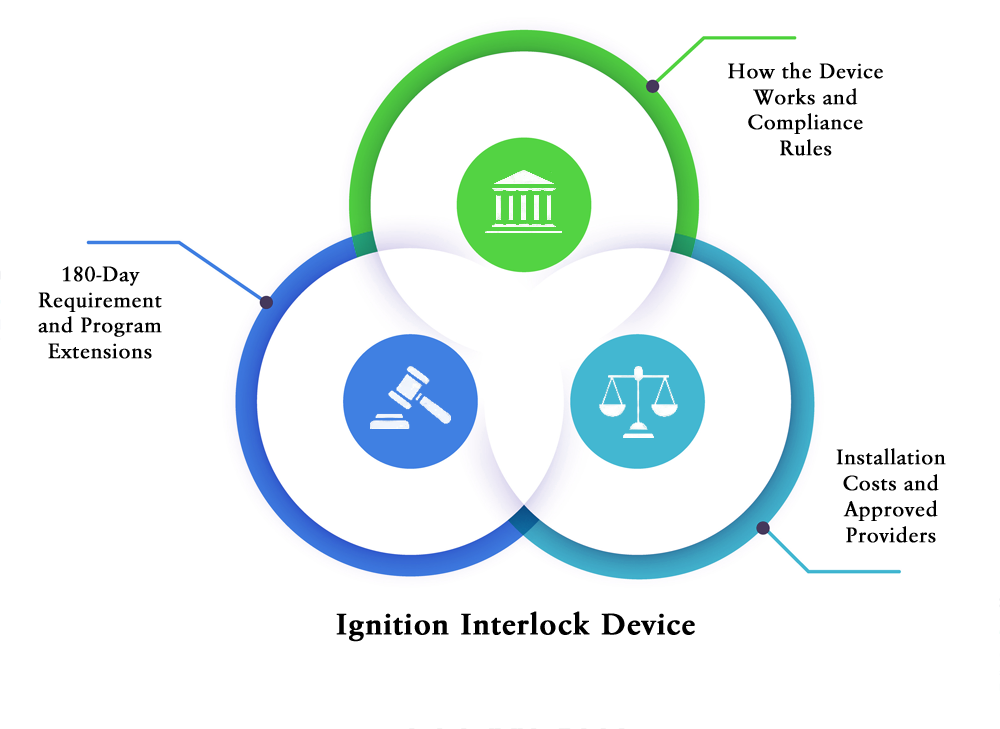
An ignition interlock device is a mandatory car breathalyzer that Oklahoma uses to ensure people arrested for a DUI can still drive safely. Under the rules of the IDAP, this device is wired into your car’s ignition and requires you to blow into it to prove you are sober before the engine will start. The device is set to a very low limit of 0.025%, and if it detects alcohol above that level, the car will not start. To make sure you don’t have someone else blow for you, the device will also ask for rolling retests at random times while you are actually driving. If you fail or miss one of these tests while the car is moving, the lights will flash, and the horn will honk until you pull over and provide a clean sample or turn the car off.
For a first-time DUI offense, Oklahoma law requires you to have this device in your car for at least 180 days as part of the IDAP program. The most important rule to remember is that your final 90 days in the program must be completely free of any alcohol detections or violations. If you fail a test, skip a retest, or tamper with the device during that final stretch, your time in the program is automatically extended by another 60 to 90 days. You also have to use the car regularly, at least 15 times a month, to prove you are following the rules. While the device is mandatory for your personal car, there is a special employer exception for first-time offenders that might allow you to drive a company-owned work vehicle without a breathalyzer during business hours, as long as your boss signs a specific waiver and you don’t own the company.
Because you have to lease these devices from state-approved companies such as Smart Start, LifeSafer, or Intoxalock, several costs are involved. You can expect to pay about $100.00 to $200.00 for installation, plus a monthly lease fee of roughly $75.00 to $100.00. Every two months, you must also take the car in for a calibration check to download the state data, which usually costs about $25.00. If you find these costs are too high, Oklahoma offers affordability accommodations for those with lower incomes to help cover lease fees. In short, the interlock device is the state’s way of letting you keep your job and your daily life on track after a DUI, provided you prove every single day that you are driving sober.
Mandatory Alcohol and Other Drug Assessments
The Alcohol and Drug Substance Abuse Course, or ADSAC, is an assessment that is a mandatory requirement for every person facing a first-time DUI in Oklahoma. This process is essentially a formal interview with a certified counselor from the Oklahoma Department of Mental Health and Substance Abuse Services. The counselor’s job is to evaluate your history with alcohol or drugs to determine if you are a high-risk driver or if you need help for a substance abuse problem. By state law, this assessment costs exactly $160.00, and you should try to schedule it as soon as possible after your arrest, as it is valid for only six months.
During the assessment, the counselor will provide you with a list of “recommendations” that you must complete before you can get your license back. For most first-time offenders, this includes attending a victim impact panel and completing either a 10-hour or a 24-hour alcohol education class. In some cases, if the evaluator finds a higher level of risk, they might even recommend outpatient counseling or a few weeks of support group meetings. It is important to know that you do not pass or fail the interview. Instead, you are given a specific to-do list tailored to your situation.
The final and most important step of this process is getting your Red Stamp Certificate. You only get this certificate after you have finished every single class and requirement on your list. Once you have proof that you have completed everything, you return to your assessor to receive the official certificate with a red state seal. You must then take this stamped paper to Service Oklahoma to prove your eligibility for your full license. Completing this process early is also very helpful for your criminal case, as it shows the judge and prosecutor that you are taking your situation seriously, which often leads to better plea deals.
Community Service
Community service in Oklahoma is a standard part of a first DUI sentence, often used as a condition of probation to help drivers avoid jail time. For a typical first-time misdemeanor, a judge will generally order between 24 and 80 hours of service, though under-21 drivers face a specific legal minimum of 20 hours. However, the Sentencing Modernization Act has increased the requirements for more serious cases. If your first DUI is considered aggravated, the law often mandates at least 10 days of community service, which most courts interpret as roughly 80 to 100 hours of work.
You cannot perform this service just anywhere; the court usually requires you to work for a registered non-profit organization or a government-run program, such as the Sheriff’s Work Program, where you might pick up trash or maintain public buildings. Some judges may also allow you to work off your actual court fines through community service if you can prove that you cannot afford to pay them. While the exchange rate varies by county, you can typically receive $10.00 to $15.00 in credit toward your fine for every hour you work. It is important to note, however, that you can only use these hours to reduce the fine itself, not mandatory fees such as your ADSAC evaluation or the cost of your breathalyzer device.
Documentation is the most critical part of a community service sentence because you must provide a signed log from a supervisor to prove you completed your hours by the court’s deadline. If you fail to finish the work within the time your probation allows, the judge can find you in violation of probation, which could lead to your original jail sentence being reinstated. For first-time offenders, completing these hours is not just about punishment. Think of it as a key step in finishing a deferred sentence, which eventually allows the DUI to be dismissed from your record. Because the rules for where you can work are so strict, most defense attorneys recommend getting your chosen non-profit approved by your probation officer before you start any work.
Victim Impact Panel
A victim impact panel is a mandatory, one-night meeting that every person facing a first-time DUI must attend. Unlike a typical classroom setting, this program is a live presentation where you listen to guest speakers, real people whose lives have been permanently changed by impaired driving, such as survivors of crashes or family members who have lost a loved one. The goal of the session, which usually lasts about 90 minutes to two hours, is to help you understand the emotional and human consequences of driving under the influence. It is designed to be a deeply personal experience that encourages you to take accountability and commit to never driving impaired again.
Under state law, you must attend a panel that is officially certified by the state’s District Attorneys Council. The standard fee for the program in 2026 is $75.00, and most organizations require you to pay this online in advance or bring a money order, as they often do not accept cash or personal checks. It is also strictly required that you arrive completely sober. Most locations have law enforcement officers on-site who may use breathalyzers at the door. If you show any signs of having consumed alcohol or drugs, you will be turned away and reported to the court for a probation violation.
Once the session is over, you will be given an official certificate of completion. This piece of paper is a vital legal document because you must provide a copy to both the Court Clerk and your probation officer to prove you have met this part of your sentence. While some online sessions are available through groups like MADD or the Victims’ Impact Panel of Oklahoma, you must ensure the court specifically approves of the format you choose, as many judges do not accept pre-recorded videos. Ultimately, the panel is a standard requirement that you only have to complete once, provided you keep your certificate and file it with the court on time.
Modified Driver’s License
The term occupational license” has effectively been replaced in DUI cases by the IDAP. Under the laws in effect in 2026, if you are arrested for a first-time DUI, the state no longer issues a restricted permit that allows you to drive only to work or the grocery store. Instead, they give you a modified driver’s license that allows you to drive anywhere at any time, as long as you have an ignition interlock device installed in your vehicle. To get this privilege, you must act quickly by enrolling in IDAP within 30 days of your arrest and paying a $150.00 enrollment fee to the Board of Tests.
Once you are enrolled and have the breathalyzer installed in your car, you must visit a Service Oklahoma location to pay for your physical modified driver’s license, which usually costs about $50.00. This license essentially serves as your occupational permit, allowing you to drive to your job, but it is actually much broader, as it does not restrict your hours or destination. The only catch is that the car you are driving must be equipped with the interlock device. If you are caught driving a vehicle without the device while holding this modified license, you can be arrested for a new felony offense under the Sentencing Modernization Act rules for 2026.
There is one important exception for those who drive for a living but do not own the company they work for. You may be eligible for an employer exception. This allows you to drive a company-owned vehicle during work hours without an interlock device, provided your employer signs a specific waiver acknowledging your DUI and the state approves the request. However, even with this exception, you must still keep an interlock device in your personal vehicle to complete your six-month IDAP requirement.
Alternative Sentencing
Oklahoma offers several alternative sentencing paths that allow first-time DUI offenders to focus on rehabilitation instead of just serving jail time. The most popular choice is a deferred sentence. In this setup, you plead guilty, but the judge defers the conviction or hits the pause button on the conviction. If you spend the next year or two following all the court’s rules, such as staying out of trouble and finishing your alcohol classes, the judge will withdraw your plea and dismiss the case entirely. This is the best way to keep your criminal record clean, though the arrest will still count as a prior if you get another DUI within 10 years.
For those who feel they need more help staying sober, many counties offer DUI Courts. This is a very structured program where you meet with a judge and a treatment team almost every week to check on your progress. It involves frequent drug testing and support group meetings, but successfully finishing the program usually leads to having your charges dropped or your fines significantly lowered. Some people may also qualify for a pretrial diversion program, which is a contract you sign directly with the District Attorney before your case even goes deep into the court system. If you finish the requirements they set for you, the prosecutor chooses not to move forward with the charges, allowing you to avoid the stress of a traditional trial.
Finally, under the Sentencing Modernization Act, judges are increasingly using 24/7 sobriety monitoring as an alternative to jail. This involves wearing a SCRAM ankle bracelet that monitors your sweat for alcohol every half hour or doing breath tests twice a day at a local station. Judges often offer this as a way for people with aggravated DUIs to avoid the mandatory 10-day jail stay that became common in 2026.
Early Intervention for First Offense DUI Charges
Taking early intervention steps in Oklahoma is a strategy designed to show the judge and prosecutor that you are taking responsibility for your actions before your case even moves forward. The most urgent step is joining the IDAP, which you must do within 30 days of your arrest. By acting quickly, you can keep your driving privileges using a breathalyzer, and if you complete the program, the DUI revocation will never show up on your permanent driving record. If you miss this short window, the revocation becomes automatic and stays on your record forever, making this the most important deadline for protecting your future.
Another powerful move is completing your ADSAC evaluation as soon as possible. Since this evaluation is required by law and costs a set fee of $160.00, finishing it early allows you to start your required classes before your first court date. When your attorney can show the prosecutor that you’ve already finished your assessment and classes, it often makes you a much better candidate for a pretrial diversion or a deferred sentence, which can lead to your charges being dismissed. Essentially, “front-loading” the work shows the court that you are serious about change and often leads to a much lighter final sentence.
Finally, for more serious cases, some people choose to start voluntary alcohol monitoring, like wearing a SCRAM ankle bracelet that tracks sobriety around the clock. Providing the court with a daily log that proves you haven’t touched alcohol since the arrest can be a massive help. It gives your lawyer the evidence needed to argue against the mandatory 10-day jail stay that often comes with aggravated DUI charges in 2026. In simple terms, early intervention is about doing the hard work up front to prove you aren’t a risk to the community, which gives the legal system a reason to be more lenient with you.
Why Breath Test Results Do Not Prove Guilt
Oklahoma law treats a breath test result of 0.08% as strong evidence of intoxication, but it does not automatically prove your guilt in a courtroom. A jury is instructed to consider the test result alongside all other evidence, such as how you were actually driving and whether you appeared alert and steady during the stop. Because of this, defense attorneys often argue that a high number on a machine is less reliable than the physical evidence of your behavior.
One reason these tests are challenged is that the machines operate on a one-size-fits-all mathematical formula that assumes everyone’s body processes alcohol the same way. In reality, factors like your body temperature, breathing patterns, or even medical conditions like acid reflux can trick the machine into giving a falsely high reading. Furthermore, Oklahoma’s Board of Tests rules allow a wide margin of error; two separate tests are considered accurate even if they differ by 0.03%. This means a person could blow a 0.11% and a 0.08%, and the state would treat both as correct, even though that is a massive difference that could change the severity of the charge.
Finally, unlike a blood test, where a sample can be saved and retested by an independent lab, a breath sample disappears as soon as the test is over. This makes it impossible for a defendant to double-check the state’s evidence. Because the machine’s internal software is also a trade secret that the public cannot inspect, lawyers often argue that the results are based on secret science rather than solid proof. Ultimately, a breath test is just one tool the state uses. If there is reasonable doubt about the machine’s accuracy or the officer’s procedures, a jury can choose to find a driver not guilty despite a high reading.
Why Field Sobriety Tests Do Not Prove Guilt
Field sobriety tests are not scientific proof that you are guilty of a DUI. Instead, they are subjective physical exercises that rely entirely on a police officer’s personal opinion. While these tests are often called standardized, the National Highway Traffic Safety Administration admits they are not 100% accurate, and the one-leg stand test sometimes fails nearly 35% of the time even when performed correctly. Because these tests are usually performed on the side of a busy road at night, factors like uneven pavement, wind, passing traffic, or even just being nervous can cause a perfectly sober person to stumble. In a 2026 courtroom, a defense lawyer can argue that these environmental conditions, rather than alcohol, are what caused you to fail the test.
Beyond the test setting, your own physical and medical history can render these results legally unreliable. For example, the eye-jerking test can be triggered by over 40 different medical issues or even just physical exhaustion, and the balance tests are often impossible for people with back injuries, inner-ear problems, or those over the age of 65. Under Oklahoma law, these exercises are considered observation-based rather than scientific, meaning they are just one piece of the puzzle. If you appeared alert, spoke clearly, and handled the rest of the traffic stop well, a jury may decide that a slight wobble on a difficult balance test isn’t enough proof to convict you.
 Why Blood Tests Do Not Prove Guilt in First Offense DUI Cases
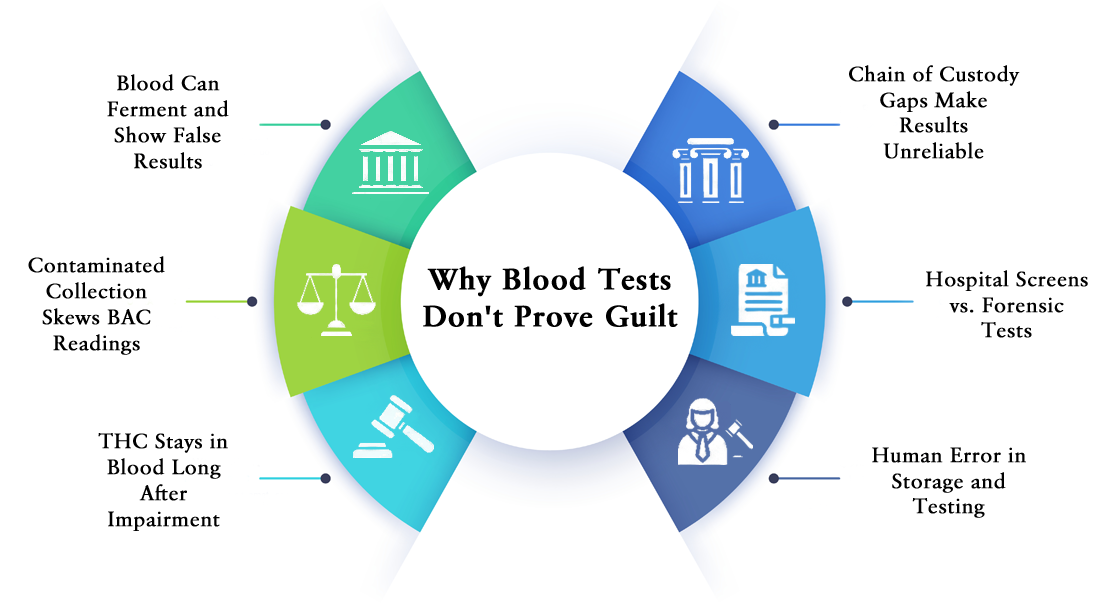
While an Oklahoma blood test is often considered highly accurate evidence, it is not absolute proof of guilt. The law requires the state to follow strict scientific rules for a blood result to be used in court. One common issue is that blood is organic and can actually ferment or create its own alcohol if it isn’t refrigerated or preserved correctly in the vial. This means a person’s blood alcohol level could appear higher in the lab than it actually was when they were driving. Additionally, because blood must be transported from a hospital to a lab, any gap in the chain of custody, such as a missing signature or the sample sitting in a hot car, can render the results legally unreliable.
The way the blood is collected also matters. Oklahoma Board of Tests rules strictly require that the person drawing your blood use an alcohol-free prep pad to clean your skin. If they accidentally use a standard alcohol swab, it can contaminate the needle and the sample, leading to a falsely high reading. Furthermore, there is a significant difference between a hospital screen, which uses blood serum and often yields results 20% to 30% higher, and a forensic test that uses whole blood. If the state tries to use a quick hospital test as proof of your exact alcohol level, a lawyer can argue that the number is scientifically inflated.
New attention is being brought to how blood tests handle marijuana. Because THC can stay in your system for weeks, a blood test might show you have it in your body even if you aren’t high at the time. To address this, HB 3018 was introduced this year to prevent the law from unfairly punishing medical marijuana patients who aren’t actually impaired. Ultimately, a blood test is just a chemical analysis performed by people who can make mistakes. If the state didn’t follow the rules for storing, transporting, or testing the sample, that number on the paper may not be enough to prove you were truly under the influence.
What the 3-Hour Rule Means in a First Offense DUI Case
The 3-hour rule is actually a common misunderstanding of a much stricter legal deadline in Oklahoma. Under 47 O.S. § 11-902, the state has a two-hour window to test your breath or blood after you are arrested. If they get a result of 0.08% or higher within those two hours, the law considers it per se evidence, which is basically a legal shortcut. It means the prosecutor doesn’t have to prove you were acting drunk or driving poorly. The number on the machine alone is enough to convict you.
If the police take longer than two hours to test you, which sometimes happens if there is a long wait at the hospital or if they have to wait for a search warrant, the rules change. The test result doesn’t automatically disappear; it just loses its shortcut status. The prosecutor can still show the number to a jury. Still, they usually have to bring in a scientific expert to explain what your alcohol level likely was two hours earlier when you were actually behind the wheel. This creates a significant opening for a defense lawyer to argue that the results are no longer reliable because your body chemistry changes over time.
The three-hour part of this rule usually only comes into play in very serious cases involving a serious accident or a death. Judges sometimes give the police a little more slack if they were busy saving lives at a crash scene and couldn’t get a blood draw done right away. In those specific emotional and high-stakes cases, a test taken up to three hours later might still be allowed. But for a standard first-time DUI stop in 2026, the two-hour mark is the real deadline that the state has to hit to have a slam dunk case against you.
Schedule a Free Case Evaluation
A DUI arrest can feel immediate and overwhelming, but the outcome is far from predetermined. Edge Law Firm begins the defense process with a free, no-obligation case evaluation designed to bring clarity, control, and direction at the earliest possible stage. In DUI cases, preparation and timing are critical because key evidence, deadlines, and legal opportunities can quickly shape the case’s direction.
Much of the stress following a DUI arrest comes from uncertainty, uncertainty about license suspension, court procedures, potential penalties, and what steps should be taken next. This confidential consultation is designed to eliminate that uncertainty. Individuals are allowed to walk through exactly what happened, ask urgent questions, and receive clear, experience-based guidance about how DUI cases are handled and what options may be available.
At the same time, the defense team begins actively evaluating the case. This includes reviewing the traffic stop, the basis for the investigation, field sobriety testing, chemical test procedures, and any available video or data. Time-sensitive evidence is identified and preserved, and the case is analyzed for weaknesses such as improper stops, flawed testing methods, inconsistencies in reporting, or potential violations of constitutional rights. In many DUI cases, these early findings can significantly influence the outcome.
From this foundation, a tailored defense strategy begins to take shape, whether that involves challenging the stop, suppressing evidence, negotiating for reduced charges, or preparing for trial. With no cost and no pressure to move forward, the evaluation’s purpose is to reduce uncertainty, protect driving privileges where possible, and provide a clear, confident path to the best possible result.